• Skip to primary navigation
  • Skip to main content

ReGroove Fitness

by Wellness Coach Dan Ma

  • Somatic Performance
    • Martial Movement
    • Skill-Based Exercise
  • Wellness Program
  • About
  • Location
  • Testimonials

Blog

4 Reasons Why Stability Training Is Important

July 28, 2020 by Dan Ma Leave a Comment

Stability Exercise trains your ability to control your body through movement on unstable surfaces, which greatly increases your neuromuscular control of your balance while strengthening your stabilizing muscles. Below are four important reasons you should include stability exercises into your training.

It Improves Athletic Performance

Functional & athletic movement cannot function optimally if there are muscle imbalances. Muscle imbalances lead to injuries. Injuries can bring training to a complete stop of progression.

Core Stability Can Help for Lower Back Pain

If you’re like me, then too much sitting gave you chronic lower back pain. Chiropractic and ergonomics was not enough for me. I had to go through a core strengthening program to keep back-attacks away.

Injury Prevention

If a muscle for any particular movement doesn’t do their fair share of the work, it passes the work to other muscles. Over time if this movement becomes a repetitive movement (like sitting for long hours), which can cause the muscle to become weak and others too strong. This is how muscle imbalances are started. Changes in both length and muscle tension can alter the a joint’s resting position and cause chronic stress. Stabilization training strengthens stability muscles, so they can be supportive to the kinetic chain.

It Improves Longevity

Improving your posture, coordination, and sense of balance is crucial for those transitioning into their golden years. Fall prevention programs usually look like this:

  1. The fear of falling: Being afraid of falling makes it harder to not fall as walking with stiffer, smaller, and slower steps might feel safer, it leads to the opposite effect by falling.
  2. Resistance training: This is usually done with flexibility, stability, and functional movement.
  3. Cognitive training: Often overlooked in many fall prevention programs, but our neuromuscular abilities play a huge role in keeping balanced.

Martial Arts & Stability Training
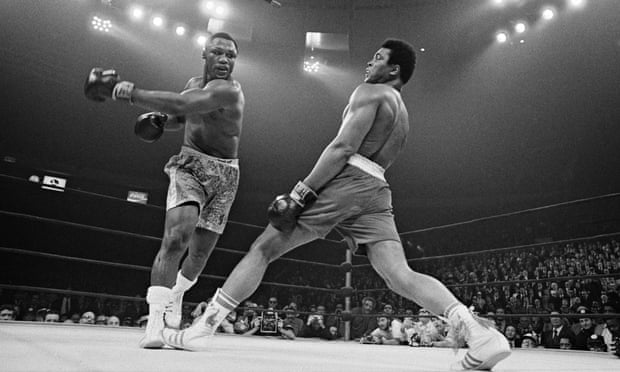
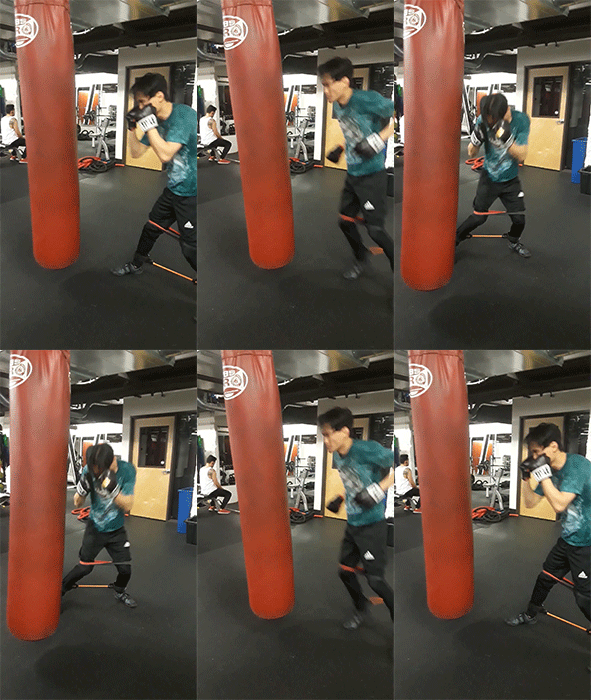
Anyone who has played around with boxing will understand how important stability is for generating power and agility. There are numerous styles that focus on rooting, grounding, and centering yourself as a means of stability training. In fact a huge part of martial art training is stability training. My martial art training address all three of these concerns. Stance training are often referred to as rooting and grounding, and are excellent ways to improve the physical components of stability. Stance training can also come in the form of standing and moving meditations, which seek to improve the non-physical aspects of health such as centering and mindful meditations. Stability training in martial arts is challenging and fun with many different kicking exercises and footwork drills that progress into SAQ & plyometric exercises. Unfortunately football isn’t something you can carry into old age, but martial arts on the other hand, grows gracefully into the golden years–especially soft styles like Wing Chun and Tai Chi.

This guy did ballet

Stability exercises will definitely improve your physical activities. Learning new activities is probably one of the best things you can do for your body and neuromuscular health. Are you looking for something new or is your body in pain? Try a free online consultation with me, I’d love to hear from you and learn about your fitness goals. Comment below and share what you think.

Recommended Balance Board

Here is a link to a balance board that I have been using for years. I have recommend this brand and model to my clients and have given them out as gifts.
Filed Under: Blog, Fitness & Health

The Versatility of Martial Arts Practice Using NASM’s OPT Model

January 22, 2020 by danma Leave a Comment

NASM markets its OPT Model or Optimum Performance Training Model as a versatile, scientifically based system that can address fitness goals from clients of any age or skill. Having been involved with martial arts for about 25 years, and embarking in getting certified in Octavio Quintero’s Art of JKD system, I wanted a fitness training system that is accessible to everyone, because I want to help those with or without a martial arts interest.

The OPT Model operates on a three-level block structure with five phases of training. Starting with the foundation of Stabilization, then Strength, and lastly Power on the top.

The Stabilization Level

The first level has one phase of training called Stabilization Endurance that focuses on increasing muscular endurance & stability while optimizing neuromuscular coordination. This phase is proprioceptively based, which means that it progressively introduces greater challenges of stabilization to the body instead of increasing the weight load. A stabilizer muscle is a smaller and weaker muscle than compared to a prime mover muscle. The theory of Stabilization Endurance is to safely produce a strong supporting foundation. If the client’s goal is to develop larger muscle mass, they must have proper Stabilization Endurance before they can they can progress to the higher two levels. From a martial arts perspective, in order to be effective, you need to grounded. An unstable practitioner will not be able to generate power in their strikes and will also lack reliable mobility. Those who wrestle will also suffer from a lack of stability, because good leverage is dependent on grounding and proper structure. The first level of the OPT Model is an excellent choice for those who have a goal of improving muscular endurance, joint stability, flexibility, posture, stability, and coordination. Inefficient stabilization will lead to injuries, something that I have learned the hard way. Skimping on foundational training in the pursuit of fast results can lead to muscle imbalances that stress the skeletal system and overloads soft tissues. Injuries can set back goals by two-folds or more, so from this perspective “slow” is actually “faster”. Have you ever been slowed down by going too fast?

Resistance Exercises for Stabilization

  1. Multiplaner Step-Up to Balance: Standing on one leg is a great exercise to challenge your stability, which is used by many Chinese martial art systems. Climbing the stairs is a great way to increase your muscle endurance in your legs. This exercise has elements of both.
  2. Ball Dumbbell Chest Press: The stability ball activates stabilizer muscles such as your core, upper back, and biceps.
  3. Multiplaner Single-Leg Box Hop-Up with Stabilization: As the name of the exercise suggests, it trains stability by launching and landing on one leg, but it can also train power depending on the explosiveness of the practitioner.

The Strength Level

The second level has three phases of training:

  • Phase 2: Strength Endurance
  • Phase 3: Hypertrophy
  • Phase 4: Maximal Strength

The focus of the second phase is to maintain the first level while increasing prime mover strength. Those who train in this phase are looking to improve stabilization endurance & prime mover strength, joint stabilization, and lean body mass. The third phase addresses those who have goals of increasing maximal muscle growth, while the fourth phase works toward the goal of maximal prime mover strength. Strength training in martial arts can be a heated debate that can have many opposing opinions and several different paths of focus. If we have to use Mixed Martial Arts as a litmus test, there are just as many successful athletes who focus on strength training as to those who don’t. What I continually admire about martial arts is the diversity in disciplines. What are your thoughts on strength conditioning within martial arts?

Resistance exercises for Strength

  1. Barbell Squat: This exercise focuses on the prime movers of the gluteals & quadriceps, but also help work the abdominal stabilizers.
  2. Flat Dumbbell Chest Press: This exercise works the prime mover of the pectoralis major.
  3. Seated Cable Row: This exercise works the prime movers of the lats and rhomboids.

The Power Level

The last level of training requires the first two levels of training as higher loads have higher demands on the body and will lead to injuries without training in the first two levels. Those who train in this level have goals of enhancing neuromuscular efficiency, prime mover strength, and increased rate of force production. Phase five uses traditional strength training superset with power exercises (light load performed as fast as possible). The concept of Power within martial arts is an interesting topic for me. There are a lot of different philosophies on how to create power, but I’d like to generally contrast external force versus internal force concepts on how to generate power. If we take the power equation of force times velocity equals power, external based styles can increase their force by increasing their body mass, though will generally be at odds of being able to increase their speed. Another external method will focus on increasing force by using postural structure that uses the ground’s force (or borrowing the Earth’s mass) as well as exercises designed to increase their speed. Internal methods can be greatly different from external methods. Of course, there are styles that can be both external and internal, but the crux of the difference revolves around relaxation to create “soft power”, because tension kills velocity. This method will also focus on minimal muscle contractions that relies more on skeletal, tendon, and fascia strength. There are other philosophies that go into the realm of the esoteric as these types of martial arts are ancient in origin, which can be challenging to discuss in our scientific western world. However, there are emerging peer-reviewed studies that force us to question what we think we know about the human body and the world we live in. How about you, do you hold unpopular beliefs that buck our scientific conventions?

Resistance exercises for Power

  1. Squat Jump: This exercise is a great aerobic and plyometric workout that builds explosive jumping power utilizing contraction-velocity.
  2. Rotation Chest Pass: This exercise builds explosive power in the prime mover of the pectoralis major utilizing contraction-velocity.
  3. Soccer Throw: This exercise promotes explosive power in the prime mover of the shoulders utilizing contraction-velocity.

Filed Under: Blog, Fitness & Health, NASM CPT Certification Training

A Way of Being

November 25, 2019 by danma Leave a Comment

I saw an interesting interview on John Kaufman about wing chun and his method of generating power through relaxation. He said something that stuck with me.

“…it’s not about what to do, it’s about how to be.”

John Kaufman

The internal methods that I am learning in Lightening Hand Academy is counter to a lot of the violence and competitiveness that I am seeing in the world today. It has been a very good experience for me to have something in my life that helps provide an antidote to feelings of competition and the violence that it brings.

I have been having conversations with a friend, who likes boxing, about traditional kung fu and MMA. If you don’t know, there are a lot of MMA opinions that wing chun doesn’t work in the ring and that there are a lot of fake martial arts coming from kung fu. There are also a lot of “experts” who hype combative sports as a means of self defense. Then there is the debate of wrestling on the streets for self defense. My conversations with him about stuff like that have been lively, but I do understand where he is coming from. It is hard to understand the internal arts if you don’t experience it, because you can’t see it, and to watch internal training is like watching someone knit a sweater.

Since I don’t see myself competing in a cage, I could go my whole life without ever using kung fu to defend myself. I really like the idea that wing chun is a way of being. Perhaps relaxation leads to the first line of defense: staying clear of trouble.

Notes From Last Class

I lucked out and had Wesley (Sigung’s son) teach me a lot of things:

  • gave me technical insights on the siu lim tao
    • opening the elbow to uproot your partner
    • different hand positions
  • went over the whole chum kiu form
    • taught me how to correctly turn
    • opening the elbow to uproot your partner
  • dan chi sau
    • fook sau adherence to your partner’s arm by opening the wrist joint on the side closest to the pinky
    • opening the elbow to uproot your partner
    • the jut sau:
      • heavy elbow locks the shoulder down and slightly opens
      • the wrist open up as you point up
  • moving and concealing your center

Filed Under: Blog, Wing Chun

Secrets of the Lost Mode of Prayer by Gregg Braden Book Review

May 6, 2017 by Dan Ma Leave a Comment

[fruitful_tabs type=”accordion” width=”100%” fit=”false”] [fruitful_tab title=”Book Info:”] Author: Gregg Braden Publisher: Hay House Language: English Pages: 184 ISBN-10: 1401951929 ISBN-13: 978-1401951924
[/fruitful_tab] [/fruitful_tabs]  

Secrets of the Lost Mode of Prayer: The Hidden Power of Beauty, Blessing, Wisdom, and Hurt

Secrets of the Lost Mode of Prayer is the second book I have enjoyed from Gregg Braden. This book was less scientifically dense than The Divine Matrix, but it does have a good assortment of references to ancient texts, such the Dead Sea Scrolls, to be intrigued about. Braden shares a lot other overlapping stories as examples for the spiritual theories he is explaining. The book isn’t very long with 184 pages. I found a good amount of material in this book to warrant a recommendation. If I had my way, I would retitle this book as “Secrets of Living a Happier Life”. The book has five chapters, each one revealing a secret on how to live happier. The first secret wasn’t a very big secret for me because I came to the book with previous knowledge of qigong and the Inner Smile Meditation. I like to call this “lost mode of prayer” the Feeling Prayer because of the parallels to the Inner Smile meditation. According to Braden’s studies, the ancients believed that we have direct access to the divine and the power of creation. There is a powerful unified field that we can access through the lost mode of prayer. This field is discussed in much finer detail in his book, The Divine Matrix. In brief, this field connects all things in the universe, which means that everything is connected and not separate. Every possibility is in the field–every possible joy and every possible sorrow. The field is also holographic, in the sense in which a cell in our body contains all the information necessary to create another you. Similarly in the field, any part of the field contains every possibility, which means that one small change in the field happens instantly to the whole system. The field is also a mirror reflecting our true beliefs–it simply mirrors the quality of our feelings as the experiences of our lives. Because the field connects everything together, our collective consciousness plays a vital role in the quality of our world. We create by our act of observation, and the quality of our beliefs determines what our consciousness creates. If we choose to view our world through a quality of separateness, anger, fear, and hate, then the field will reflect these qualities back to us as such in our families, workplace, in our bodies, and all the other aspects of our lives. The power of the lost mode of prayer is that we can choose to view our world through the qualities of unity, gratitude, love, and wisdom instead. The understanding of “lost mode of prayer” and The Divine Matrix has supercharged the Inner Smile meditation for me, because it allows me to really believe in what I am doing has a real effect inside of me and outside of me. Some of my experiences have been so powerful that it moves me to tears of joy. The second secret is about hurt, and the realization that hurt helps us to learn. Hurt teaches us a great many things about ourselves and the relationships that we have.The greater the hurt, the greater the benefits of forgiveness. To be able to feel love, we have to be open enough to be vulnerable to our pain. Hurt is a way for us to understand how deeply we can feel–it shows us how deeply we can love. When we learn from our hurt, it then turns into wisdom. True wisdom is not something you can learn in a book, it is something you learn through feeling and experience. It has been scientifically proven that stress and emotional duress causes sickness in our bodies. When we don’t deal with bad feelings we inadvertently hurt ourselves more than if we choose to deal with it completely at the moment. It seems so very obvious to me in my life experiences that these feelings don’t ever go away if you don’t choose to resolve them. Have you ever known someone long enough to see a pattern of unresolved hurt continue to resurface? It is very sad to see this because you want to help, but it is hard to help them if they don’t want to deal with it. Sometimes hurt is bad enough that it is buried deep, that the consciousness cannot remember the event, but the subconscious remembers. When something triggers this hurt, you will follow a defensive pattern to deal with it, rather than dealing with past hurt and the new hurt. This pattern is a groove in your life and the longer you play out these recurring patterns the groove gets deeper and deeper. In some extreme cases hurt can be so deep that another identity is created to help keep it buried. So far this secret has been teaching me to be more critical about myself and my feelings. What am I feeling? Why am I feeling this? What is triggering this pattern? This is a lot different than placing blame outside of you. Instead it helps you find something inside of you to heal. It keeps me on my toes, because I never know when I may get triggered into a pattern. The hardest part is trying to understand where it comes from, but each time I am tasked I am always rewarded to surrender my ego and let go and heal. The third secret is a blessing. It is a tool in which to acknowledge the hurt in our day to day lives as well as the sufferings of the past. Bless those who suffer, bless whatever causes the suffering, and bless those who witness the suffering. By our blessings we temporarily suspend our hurt to make it possible to replace it with another feeling–you assume your power to let go of life’s deepest hurts and unresolved feelings. After all, the best learning we do is from these challenges that life gives us so from this perspective it is a blessing. Perhaps you can tell already that the secret of the blessing is very helpful to consider when using the secret of hurt as a teacher. If you are able to bless a hurt, you may be able to see it as it really is and regroove it into a wisdom. The fourth secret is that beauty is always present in all things–the power to see beauty is a choice. The power of choosing to see beauty in our lives is the power to see beyond the hurt and pain that world is offering us and recognize the beauty that exists in all things. The power to see beauty gives us a greater appreciation in our lives and those around us. When you are able to see the beauty in hurt you can bless it and move forward with better grace in your life. I am really interested in bringing more beauty into my life. How do I find beauty in all things around me, especially when there is so much ugliness being splashed around? Is it too impractical to be happy all the time? Is it even possible? Perhaps this is the beauty in salat, which is the obligatory prayer, performed five times each day by Muslims. Maybe this method invites us to bring more beauty into our lives. I also did some research about impermanence, which comes from Buddhism. In my understanding, the Buddhist philosophy of impermanence expresses that all temporal things, whether material or mental, are in a continuous change of condition. Maybe by applying this concept into things that we do not see as beautiful, we can remind ourselves that it has the possibility to become beautiful. I rather like this idea as it gives us a daily exercise for our creative powers that we all have within us whether we realize it or not. I am trying to be more mindful about taking the time to appreciate the beauty around me, and when I do see something beautiful, I like to think that life has put it there just for me in that special little moment. The fifth secret is that you are not a victim of life’s circumstances, you are a powerful co-creator, and we all participate in creating the world we live in. I came into this book practicing the first secret, which has been a huge positive change in my life and my relationships. I am interested in how the other secrets will further shape me. I already feel that I have more tools to help promote more happiness in my life. This is the result of searching for more meaning in my life, one of the reasons why I started this blog. All of Braden’s publications so far have all been positive and empowering for me. Although I have known to varying degrees about the other secrets (hurt as a teacher, blessing as an emotional lubricant, beauty as a transformer of hurt), I never understood them in the context in which Braden covers it in this book. I am able to incorporate them with much more clarity and vigor. I am truly grateful for all the information that Gregg Braden has made available, and I am glad that I have had the opportunity to come across them. I am also appreciative that I am able to share some of that information with you, and I would encourage anyone to take a deeper look. Have you had any experiences using any of these techniques? Please comment and share. From my heart to yours.  
Shopping at Amazon? Please support Regroove Meditation by using our link, we get a referral commission on anything you purchase.

Filed Under: Blog, Book Reviews, Reviews Tagged With: Book Review, Feeling Prayer, Gregg Braden

The Inner Smile by Mantak Chia Book Review

May 5, 2017 by Dan Ma Leave a Comment

[fruitful_tabs type=”accordion” width=”100%” fit=”false”] [fruitful_tab title=”Book Info”] Author: Mantak Chia Publisher: Destiny Books Language: English Pages: 80 ISBN-10: 1594771553 ISBN-13: 978-1594771552
[/fruitful_tab] [/fruitful_tabs]

The Inner Smile: Increasing Chi through the Cultivation of Joy

I don’t think I came across Mantak Chia’s information by accident, because by coming across his material he has helped be back onto a path of happiness. During my formative years I was practicing a form of chi kung that my father taught me, but I never knew the name of it to follow up on it. After three years of daily practice I gave it up to pursue other interests. Now I am in my 40’s, and a couple years ago I ran into this form of chi kung by Mantak Chia and with great surprise there is a lot more to learn. I bought his book, Iron Shirt Chi Kung, it highly recommends learning the Inner Smile and the Microcosmic Orbit (Awaken Healing Energy Through The Tao), which is what I did. Master Chia is the world’s most famous Inner Alchemy Taoist and Chi Kung (Qigong) Master. The Inner Smile is a thin book. The instructions on how to do it is actually in his other books and even shared on YouTube. I still wanted to buy the book, because other information varies a bit and I also wanted to understand it better. The general gist of how this meditation works is that you draw loving energy into your eyes, then let it flow to important regions of your body, or different lines, and smile to them one at a time. There is a front line, a middle line, and a back line. The front line focuses on bringing loving energy to each of the major organs. The middle focuses on the digestive system, and the back line focuses on the central nervous system. I learned the Inner Smile from this book and now look forward to attending the Mantak Chia PDX Workshop 2017 . This will round out my research and assure that I am practicing this meditation to its fullest. At first I found it hard to do and was unenthusiastic about the practice, but I kept at it. Then one day, maybe about a month later, I was able to feel a pulsing in my third-eye, a feeling I have never felt or noticed before. This was exciting to me and I felt emboldened in my resolve to practice more earnestly. Another discovery that has helped my understanding and practice of the Inner Smile, was when I started following Gregg Braden and learned his Secrets of the Lost Mode of Prayer, or Feeling Prayer. The Feeling Prayer super-charged my experiences with the Inner Smile meditation. Whatever background, religion, or non-religion you come from, you can benefit from it. Mantak Chia grew up in a Christian household and says his practices does not negate any religion. The Inner Smile has personally been such an extremely powerful practice in my life, I have insisted that my partner Veronica practice this style of meditation as consistently as possible. I am also trying to teach this meditation to my mother. I think very highly of this practice and invite the world to try it, which is a reason why I started this site! Thank you for your support! From my heart to yours.  
Shopping at Amazon? Please support Regroove Meditation by using our link, we get a referral commission on anything you purchase.

Filed Under: Blog, Book Reviews, Reviews Tagged With: Book Review, Mantak Chia, Mantak Chia Books

The Divine Matrix by Gregg Braden Book Review

April 19, 2017 by Dan Ma Leave a Comment

The Divine Matrix by Gregg Braden
[fruitful_tabs type=”accordion” width=”100%” fit=”false”] [fruitful_tab title=”Book Info”] Author: Gregg Braden Publisher: Hay House Language: English Pages: 256 ISBN-10: 1401905706 ISBN-13: 978-1401905705
[/fruitful_tab] [/fruitful_tabs]  

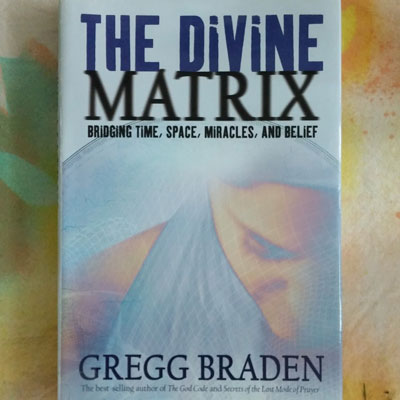
The Divine Matrix: Bridging Time, Space, Miracles, and Belief

After reading The Divine Matrix by Gregg Braden, I feel inspired and empowered. However, if you are not open to spirituality and/or don’t like science, then this book is definitely not for you. This book is not intended to be a definitive work on the history of science, nor religion and spirituality. It is intended to be a guide or tool that everyday people can use to bring hope and peace into their lives, which is what I really need right now. Braden is able to explain really complex scientific theory as understandable takeaways for those who find dense scientific material challenging. Readers don’t have to be extremely left brained to get something out of this book, but Braden does reference scientific sources if you want to follow up with deeper inquiry. Braden believes that there is an intelligent field that is a container that holds the universe. This field acts as a bridge to create, and also acts as a mirror to show us what we have created. Emotion is the language that this field understands and through our beliefs and certain meditation techniques (the Feeling Prayer), we can focus our consciousness and communicate the positive changes that we desire. Gregg Braden is a New York Times best-selling author and has been a featured guest for international conferences and media specials for taking scientific discoveries and contextualizing them within ancient spiritual teachings like the Vedas and Dead Sea Scrolls. Gregg Braden’s 20 year exploration has brought him to remote monasteries and ancient temples to sift through forgotten texts and rediscover their spiritual meanings. The Divine Matrix: Bridging Time, Space, Miracles, and Belief, has three parts:
  1. Discovering the Divine Matrix
  2. The Bridge Between Imagination and Reality
  3. Messages From the Divine Matrix
In the first part, Braden goes into why he solidly believes that this field that he calls the Divine Matrix exists. He cites many well respected and renowned scientists, ancient religions, and experiments that already recognize this field as a legitimate force in our world. In the second part, he describes his interesting travels to Tibetan monasteries to ascertain how we use and intentionally create with the Divine Matrix. The third and final part of this book, goes into questions of what it means to have a unified field of energy, how it affects the events in our lives, how we can recognize key changing moments, and how we can learn and grow from them. This is the most enjoyable section of the book for me because Braden shares many of his life events as examples where the Divine Matrix speaks to us, providing life lessons and challenges for spiritual growth. The thing that I most admire about this book is the hope and optimism that it brings during these times where people sometimes feel hopeless in a world that has lost all its morals. Understanding how the Divine Matrix works has improved my meditation work. I feel more empowered in my meditations knowing that my work not only has an inner effect, but also an outer effect. In this book he gives many empowering accounts of how we can change our life and this world into what we want it to be. Braden shares an experience he had with a woman who was documented on video to have miraculously healed herself from cancer within minutes by using the methods he describes in this book. This account helps reinforce my belief that we have a powerful technology within to heal ourselves and that we don’t have to rely on the pharmaceutical industry to solve our problems. Braden also shares scientific studies where meditation practitioners were able to consistently and accurately create peace at specific times and specific locations. In fact he goes on to share a formula defining the minimum amount of people needed to jumpstart a change in consciousness as equal to the square root of one percent of a population. These kinds of accounts help reinforce my belief that we have the power in ourselves to change the world. As I watch and listen to the news of how those in power continually make choices that benefit those in power, I am reminded that I cannot wait for them to make the right changes. The change has to happen in me so I can join those who already have peace in their hearts and help influence those who do not, as well. I am beginning to realize that when you hurt someone you actually hurt yourself–that every war is actually a war against ourselves. Fighting for peace is like shouting for silence. As I continue my pursuits of peace and meditation, I continually find those who share the same belief that if more people regularly practiced meditation that the world would be a much better place. There is something powerful about the nature of introspection, something that seems to be evaporating in our modern society as our focus and energy is constantly being drawn out from ourselves by the capitalist machine through its tools of media and technology. I feel as if this machine has raised us to become dependant on material things to feed our egos instead of cultivating our spiritual growth, because spiritual things have no monetary value other than the means of spiritual control. In the later chapters of this book, I was intrigued by The Fourth Mirror: Reflections of Our Dark Night of the Soul. The Dark Night of the Soul is defined in this book as life’s reflection of our fears and acts as a rites of passage to experience and heal our own great fears. I began to think about my own past and look within myself if I have had any Dark Night of the Soul experiences. I would like to share a story from my life to you.

The Dishwasher

Ego
My parents owned a Chinese restaurant in Astoria, Oregon where I went to high school. During those formative years of high school, my life was divided between school, being a juvenile delinquent, and being paid by my parents as a dishwasher. Soon after high school I enrolled in the community college and started to take school seriously. Most of my previous “partners-in-crime’ moved on to out of state colleges, so instead of causing trouble I found in myself the ability to learn and earn good grades for the first time in my life. In the middle of my community college experience I also found a relationship with a girl who was supportive in my new ability to get good grades, but sooner or later the relationship fell apart and it became really hard for me to focus on work. I decided to transfer to the University of Oregon. My experience at the U of O provided a lot of personal growth. I took a lot of business classes as that was what my dad wanted me to pursue. I quickly found out that business was not what I wanted to do, so I got a major in Fine Arts. This was not favorable in the eyes of my dad, but he did not protest. In the U of O art program I felt a powerful and meaningful way of self-exploration of my identity as a first generation Chinese-American. I was very passionate about my work and was given a lot of encouragement by my peers and from the faculty, which had a profound effect on my self-esteem. I also found an amazing circle of supportive friends whose positive influence realized in me a strength of character and self-worth that I didn’t know I had in me. Soon after I graduated my parents asked me to come home and help with the shop because it wasn’t doing very well and they were looking to sell the restaurant. I came back home to the small coastal town and realized how my life had changed, but returning to live in my parents’ basement and wash dishes in the restaurant made me feel like I hadn’t made any progress, like I was back in high school again and didn’t experience that growth. I reached a shameful level of depression and became an all around jerk. I think I had a pretty big chip on my shoulder. I was so miserable that I had with me a dark cloud that become problematic for those around me. I was even asked on a few occasions to leave by my parents, but I stayed until they were able to sell the restaurant. Looking back on it now, I had failed to recognize it for what it was. It was an opportunity for me to show my parents that I had a positive transformation while I was gone and no longer identified with the juvenile delinquent days of selfish and destructive pleasures. Instead of showing them I had become a new, more self-confident person, I showed them that I had regressed from what they had thought of me from before I left for the U of O. My rite of passage into adulthood did not fulfill itself this time, but I think the experience had emboldened me to understand that I am the master of my own circumstances and I had the strength and power to do both great and not-so-great deeds. I think because of my failure to resolve my previous rite of passage with my family, life gave me another chance in resolution in a much more stark and brutal way. After moving to Portland and away from my parent’s house I applied to several grad schools to get into a Master’s in Fine Arts program. I was thrilled when I learned I had been awarded a full scholarship for the University of Illinois! Before I left, I found myself in a doctor’s office with my dad waiting to hear what was wrong with him. In the waiting room with my dad, I shared my good news about the scholarship, but he did not receive it warmly, saying, “…they must not have had a lot of participants.” Shortly after, the doctor had came in to tell me that my father had advanced liver cancer and there was not much that they could do to cure him. That episode of my life was very quick for me, and I don’t recall what kind of emotions circulated within me. I don’t really recall with any great clarity the time from when I learned about my father’s condition to when I moved to Illinois for school. Grad school in itself is a rather long and different story that I will have to set aside and deal with at a later date. It wasn’t until the end of my first semester at grad school before I got a phone call to come home as my father’s health had worsened. I decided I should cut my long hair that dad hated so much and left school to see my father on his deathbed. I was with my father from the beginning of being home in their newly built house in Portland, Oregon, to that night when my father would not wake up and we had to call for the ambulance in the middle of the night. From the hospital night when my father spoke to me for the very last time in Cantonese, which I didn’t understand a word of, to the very end when we cremated him. I was with him from the beginning to the end of his last days. I didn’t have much to time to mourn. My father had another business which he shared with a business partner. We had to involve lawyers. It was nasty, but in the end we severed ties with the business. In a very brutal way life had forced me into adulthood by dealing with the death of my father, the collapse of his business, protecting my mother and the rest of my father’s assets. The Divine Matrix by Gregg Braden, has helped me gain greater insight into a time of my life, which I would have had liked to have forgotten about, but by unmasking my fears I can attain a greater appreciation of it. Also… I suppose this gives me another opportunity, to repay my karmic debt with my mother and resolve some past suffering that I caused. Thank you for allowing me to share my experiences with you. I wish you the kindest success!  
Shopping at Amazon? Please support Regroove Meditation by using our link, we get a referral commission on anything you purchase.

Filed Under: Blog, Book Reviews, Reviews Tagged With: Book Review, Feeling Prayer, Gregg Braden

« Previous Page
Next Page »
  • Somatic Performance
  • Wellness Coaching
  • About
  • Blog
  • Contact

ReGroove Fitness | Somatic Personal Training in Portland, OR


Loading Comments...